Getting a flat tire can be a stressful experience, especially if you are stuck on the side of a busy highway. However, you do not need to wait hours for roadside assistance. Learning how to change a tire is an essential life skill that any driver can master in just a few minutes. With the right tools and a little confidence, you can safely swap out the flat and get back on the road.
Quick Facts
- Time Required: 15 – 30 minutes
- Difficulty Level: Beginner
- Tools Needed: Car jack, lug wrench, fully inflated spare tire, vehicle owner’s manual. (Optional: gloves, flashlight, and wheel wedges).
Before You Start: Safety First
Step 1: Find a Safe Location
As soon as you realize you have a flat, do not brake abruptly. Slowly reduce your speed and scan your surroundings for a safe, flat, and straight stretch of road. A solid, level surface is required to prevent your vehicle from rolling off the jack. Turn on your hazard lights to warn other drivers.
Step 2: Secure Your Vehicle
Apply your parking brake (emergency brake) immediately. If you have wheel wedges, rocks, or large pieces of wood nearby, place them in front of or behind the tires to ensure the car does not roll.
| Flat Tire Location | Where to Place Wheel Wedges |
| Front Tires | Place wedges snugly behind the rear tires. |
| Rear Tires | Place wedges snugly in front of the front tires. |
The Tire Changing Process
Step 3: Loosen the Lug Nuts
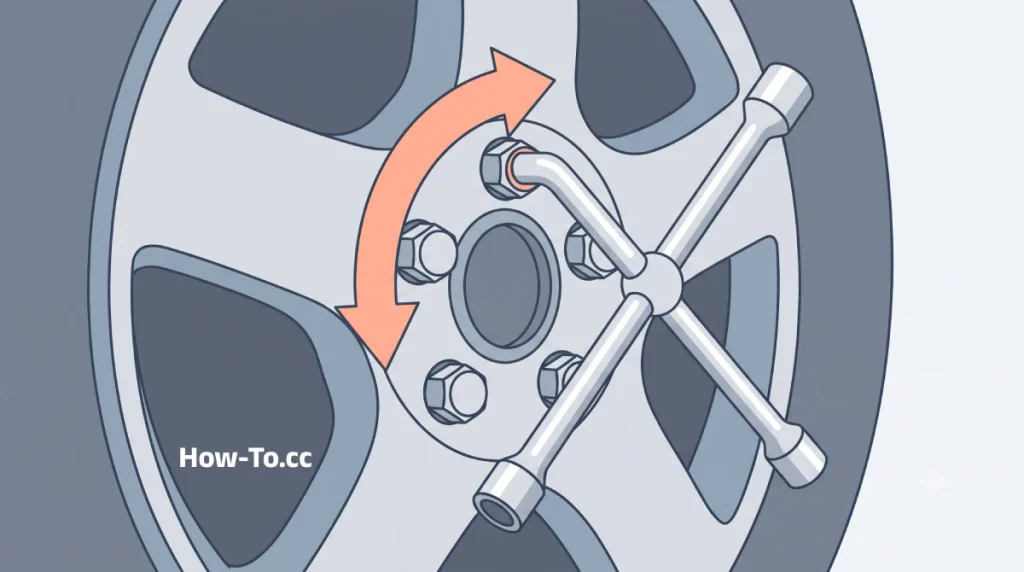
Take your lug wrench and place it securely onto a lug nut. Apply pressure counter-clockwise (lefty-loosey) to break the resistance. You may need to use your body weight to loosen them if they are tightly fastened.
- Important: Only loosen the lug nuts by about a quarter to a half turn. Do not remove them completely while the tire is still touching the ground.
Step 4: Lift the Vehicle With the Jack
Consult your owner’s manual to find the exact jacking points for your specific vehicle model. Usually, there is an exposed metal area just behind the front wheels or just in front of the rear wheels.
- Place the jack under the designated lifting point.
- Slowly raise the vehicle until the flat tire is about six inches off the ground.
- Never put any part of your body under the vehicle while it is raised.
Step 5: Remove the Flat Tire and Mount the Spare
Now that the car is lifted, remove the loosened lug nuts entirely. Grip the flat tire by the treads, pull it gently toward you, and set it aside flat on the ground. Next, lift your spare tire and align the rim with the exposed lug bolts. Push the spare tire gently until it rests flat against the wheel hub. Put the lug nuts back on and tighten them by hand as much as possible.
Step 6: Lower the Vehicle and Tighten Lug Nuts
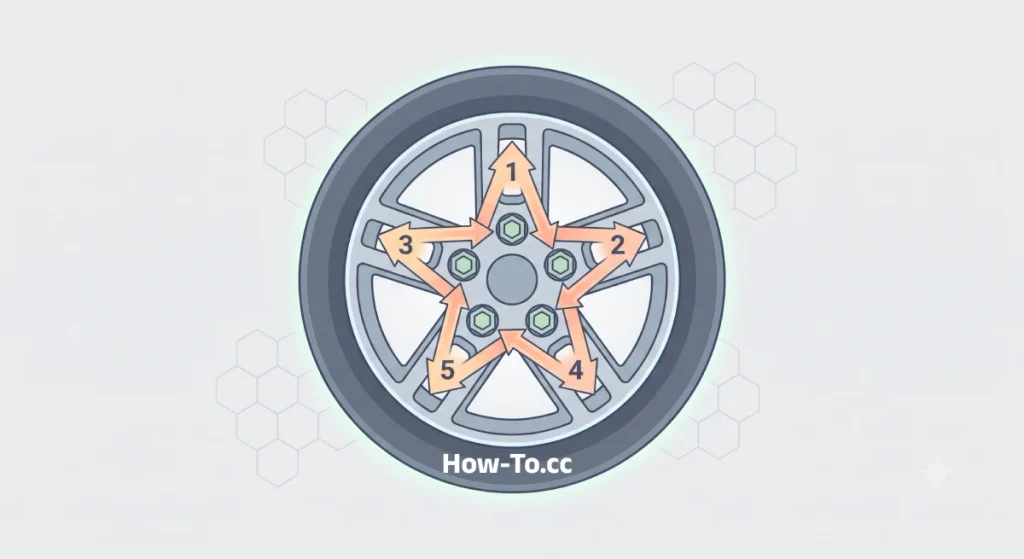
Use the jack to lower the vehicle so that the spare tire is resting on the ground, but the full weight of the car isn’t fully on the tire yet. Now, take your lug wrench and tighten the lug nuts completely. Tighten them in a star pattern (crisscross) rather than in a circle. This ensures the tire goes on evenly. Once tight, lower the vehicle completely and remove the jack.
Step 7: Stow Your Equipment and Check Spare Pressure
Put your flat tire, jack, and lug wrench securely back into your trunk. If you have a tire pressure gauge, quickly check the spare tire’s pressure to ensure it is safe to drive on.
Frequently Asked Questions (FAQs)
How far can I drive on a spare tire?
Most temporary spare tires (donuts) are designed for short distances only. You should not drive more than 50 miles, and you must keep your speed under 50 miles per hour. Visit a tire shop immediately to get your standard tire repaired or replaced.
What should I do if the lug nuts are completely stuck?
If the lug nuts won’t budge, try carefully placing your foot on the lug wrench arm and applying your body weight. If they are rusted, spraying a little penetrating oil (like WD-40) and waiting five minutes can help break down the rust.
Can I change a tire on an incline or hill?
No. Changing a tire on an incline is extremely dangerous. The jack can easily slip, causing the car to fall. Always drive slowly to a flat, solid surface, even if it means driving a short distance on the flat tire.
Don’t let a flat tire leave you stranded! Bookmark this guide for emergencies, and consider sharing it with new teenage drivers or family members so they are always prepared for the road ahead. If you have any extra roadside tips, drop a comment below!